


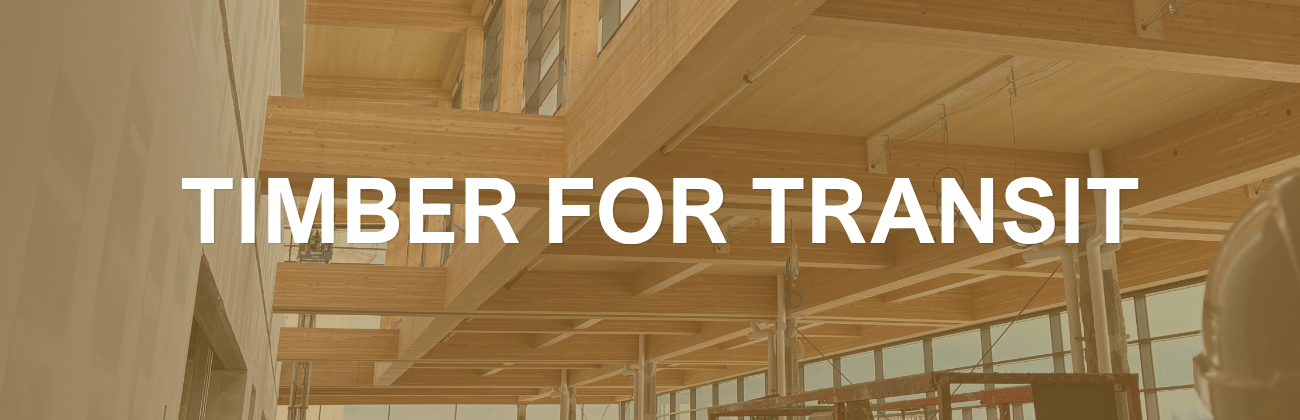
NBRC's Timber for Transit (T4T) Program advances the use of wood materials and composites through applied research and demonstration projects that showcase the suitability of such materials in transportation and transportation adjacent infrastructure, in alignment with state and community initiatives.
Timber for Transit Program & Investment Priorities
This funding advances the use of wood-based materials and composites (advanced wood materials) through applied research and demonstration projects that showcase the suitability of such materials to transportation and transportation adjacent infrastructure.
Highly competitive projects will demonstrate and widely promote the utility of high value forest products (e.g. glued laminated timber, cross laminated timber, composite materials, etc.) in transportation infrastructure and planning for extreme weather readiness. Transportation infrastructure shall mean construction, alteration, or repair, for the purpose of transporting people and goods, including fixed installations and rights of way necessary for transporting from one point to another, including infrastructure that improves economic mobility for individuals, and may include roads, railways, airways, waterways, canals and terminals such as airports, railway stations, bus stations, parking, refueling depots, and seaports.
Timber for Transit supports a broad range of feasibility and implementation projects including, but not limited to:
-
State or regional inventory assessments of the suitability of wood components to address needed transportation infrastructure improvements and/or new construction;
-
Architectural and engineering designs, cost analyses, and permitting necessary for implementation of transportation infrastructure projects;
-
Transportation infrastructure projects which utilize commercialized wood products and advanced wood materials;
-
Design and construction of pilot and demonstration projects that showcase the capabilities and benefits of utilizing advanced wood materials in transportation infrastructure, and;
-
Transportation-adjacent structures that utilize advanced wood materials. Basic research projects will not be considered. Preference will be given to applied research and demonstration projects with a strong connection to industry.
Timber for Transit gives preference to proposals that:
-
Commit to utilizing domestically sourced timber, with preference for projects that utilize timber products sourced and/or produced within the NBRC territory
-
Demonstrate evidence of planning for extreme weather readiness, including but not limited to carbon capture, increased frequency and intensity of storm events, and sea level rise.
-
Utilize projects as a tool for university and industry education and training
-
Demonstrate alignment with state and community initiatives.
-
Include promotion/publication/marketing as part of their project deliverables
-
Support, benefit, or engage communities that are impacted by specific socio-economic indicators.
|
Entities considering applications in 2026 can complete a Project Interest Form and contact the NBRC Timber for Transit Program Manager Marina Caceres (Bowie), the NBRC Program Manager in the Member State(s) where the proposed project will take place, and/or a Program Advisory Board member. The Project Interest Form is not the pre‑application. It simply alerts NBRC and your State Program Manager that you intend to apply, and it should accompany any request for early project feedback. |
| Timber for Transit Program Overview | Timber for Transit Program One Pager | Project Interest Form | Advisory Board Member List |
Related Content:

|

|

|